How Lights-Out Machining Reduces Lead Times
LightsOut CNC Journal · 5 min read
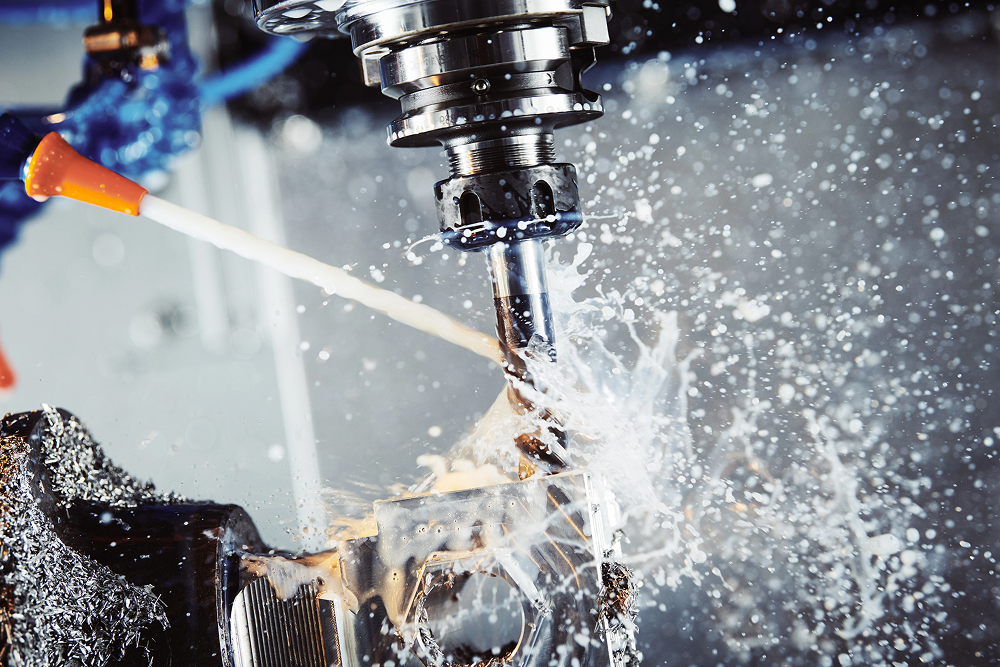
Ask any buyer who has sourced precision machined parts what actually drives their lead time, and the honest answer usually isn't machining time at all — it's shop capacity. A single 3-axis mill running one 8-hour shift a day has roughly 40 spindle-hours available per week. Add setup, tool changes, inspection, and operator breaks, and the real cutting time is smaller still. Every job in the queue is competing for a narrow window, which is why quoted lead times stretch out even for parts that only take a few hours to actually cut.
The math changes when the spindle doesn't stop
Lights-out machining means running production unattended — through the night, over weekends, without an operator standing at the machine. It doesn't work by cutting faster; it works by making far more of the week available for cutting in the first place. A shop running 24 hours a day has three times the spindle-hours of a single-shift shop with the same machines, without adding headcount or floor space.
At LightsOut, our two Matsuura MX-330 5-axis machining centers each carry a 10-position automated pallet pool. That pallet capacity is what makes unattended running possible: a machine finishes one pallet, indexes to the next queued job, and keeps cutting with nobody on the floor. Matching that output on a single shift would take a much larger shop — and a much larger payroll.
What actually has to be true for unattended running to work
Running a machine overnight with nobody on the floor is not simply a matter of leaving it on. It requires the process to be trustworthy enough that nothing needs a human to catch it. In practice that means:
- Automated work-holding and pallet changeover, so the machine can move from one job to the next without manual intervention.
- In-process probing, so the machine verifies its own setup and part datums before it commits to a cutting operation, rather than relying on an operator to catch a bad first article.
- Tool life and load monitoring, so a worn or broken tool doesn't silently scrap an entire unattended run.
- Programmed, repeatable CAM strategies that don't depend on an operator's judgment call mid-cycle.
Remove any one of those, and unattended running turns into a liability instead of an advantage — the whole point is that a problem gets caught by the process, not by a person watching the machine.
What this means for the customer
The practical effect shows up before a part ever gets cut. Because capacity isn't bottlenecked by shift hours, a new job doesn't wait as long for a machine slot — and a quote can be priced against real available capacity instead of manually wedged into an already-full schedule.
It's worth being direct about what unattended machining does not fix. Lead time on a finished part is still the sum of every step in the process — raw material availability, secondary operations like anodizing or plating, outside NDT, and final inspection all take the time they take regardless of how the milling itself is scheduled. Lights-out production compresses the machining bottleneck; it doesn't eliminate every other step in getting a certified part out the door. What it does change is the part of the timeline that used to be the longest wait — getting your job onto a machine in the first place.
The takeaway
Lead time is fundamentally a capacity problem, and capacity is a function of how many hours a week your machines are actually cutting. A shop that has engineered its process — work-holding, probing, monitoring, and programming — to run safely without an operator present isn't just adding a marketing angle. It's multiplying the hours available to do the work, which is the single biggest lever on how fast a quote turns into a shipped part.