HOW WE MACHINE
We built this shop around a specific theory: the right software, the right machine, and the right automation together produce better parts at lower cost than labor-intensive alternatives. Here is how every job actually runs.
SOFTWARE
Every job starts as data and stays data until it becomes a part. That continuity — from your file through CAM, simulation, and job management — is what makes unattended production reliable enough to run without anyone on the floor.
01
You upload a STEP file and drawing through our secure upload page. It captures part geometry, quantity, material, and any special requirements, and routes them straight into our quoting workflow. No email chains, no hunting for the right inbox.
02
Our programmers build toolpaths for the MX-330 in Mastercam, using part-family templates set up for high-mix 5-axis aerospace work. Toolpath strategy, optimization, and feed and speed selection are handled in-house. Every program is reviewed and approved before it touches the machine.
03
Before anything goes to the machine, every NC program runs through independent CNC simulation and verification — checking each toolpath against the machine model, fixture, and workholding for collisions, gouges, and dimensional accuracy. A program that doesn't clear simulation doesn't get to the machine.
04
Our production management system ties every operation, material lot, tooling set, and inspection result to the specific part number and serial. Machine monitoring for spindle use and alarms comes online with the machines. Every job that ships carries a complete record of what was done to it, on which machine, and when: the digital foundation of an AS9100D-ready quality system.
HARDWARE
Two Matsuura MX-330 5-axis machining centers, purpose-selected for lights-out, high-mix, precision aerospace work. The first arrives in November 2026 and the second in January 2027.
05
Each MX-330 carries a factory-integrated PC-10 10-position automated pallet changer. Pallets are fixtured and loaded during staffed hours, then staged in the tower. When the shift ends, the machine works through the queue on its own — rotating to the next pallet when the current one is done, with no one on the floor. Twenty pallet positions across both machines means a full evening or weekend of production can be staged in advance.
06
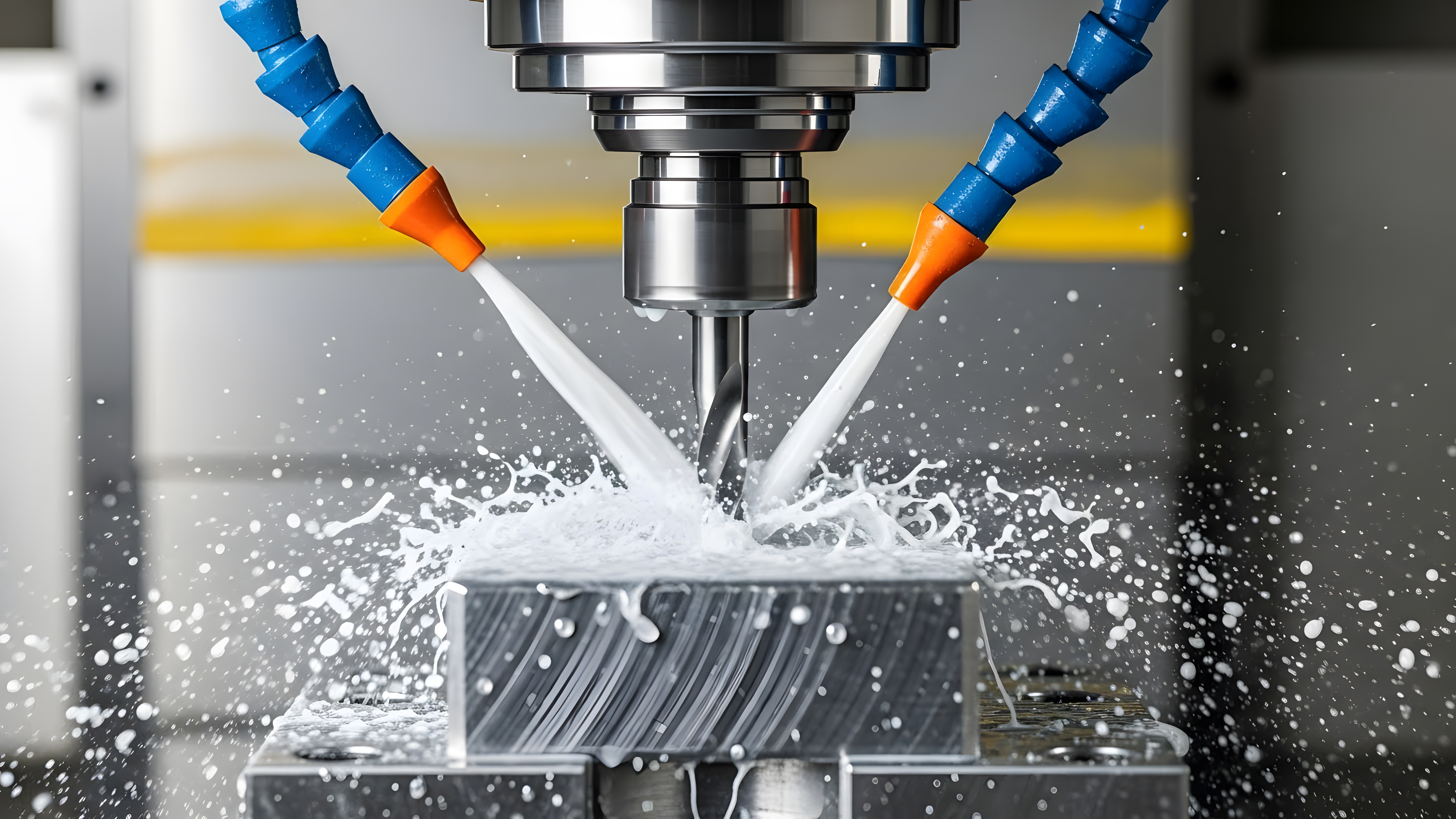
The MX-330 runs a 20,000 RPM HSK spindle with 1,000-psi high-pressure coolant delivered through the tool — critical for deep pocket work and aluminum chip evacuation in unattended production. A 90-tool automatic toolchanger keeps multiple jobs running back-to-back without manual tool intervention. Tool life monitoring and spindle load sensing flag problems before they become scrap.
07
Each machine is equipped with a Renishaw OMP400 workpiece probing system. The machine probes its own setup before committing to a cut — verifying datum locations, confirming tool geometry, and checking critical dimensions after key operations. Problems are caught mid-cycle, not after the part is done. Production tolerance capability: ±0.0005″.
THE ECONOMICS
Most aerospace machine shops run one shift. A machine that sits idle from 5pm Friday to 8am Monday is a machine whose capital cost, floor space, and overhead are being amortized across roughly 40 spindle-hours a week instead of the 100-plus it is capable of. Every idle hour gets rolled into the per-part price.
LightsOut is built around the opposite math. Both machines are set up to run lights-out (evenings, nights, and weekends) through the pallet pool. The same machines, producing to the same tolerances, spread their fixed costs across far more cutting hours per week. Labor cost during overnight production is zero. The overhead burden per part drops accordingly, and that savings goes directly into price.
This is not about cutting corners on process. The machines, tooling, probing, and verification are identical whether an operator is standing there or not. It is about not charging customers for the hours the spindle was sitting still. That is what makes it possible to offer aerospace-grade precision — 5-axis, single-setup, ±0.0005″, fully traceable — at rates that compete with shops charging for a fraction of the same machine’s output.